Symbols of Equality: 15 Powerful Icons and Their Meanings
Symbols of equality surround us in courtrooms, classrooms, protest marches, and even the quiet notation of a math problem. They are visual shortcuts that carry centuries of meaning, condensing complex ideas about fairness, dignity, and human worth into a single recognizable form. When we see a set of balanced scales or a raised fist, we do not need a lecture to understand the underlying promise: that every person deserves the same treatment, the same rights, and the same voice.
Understanding these symbols matters because equality itself is an abstract ideal, and abstractions are hard to rally around. A symbol gives that ideal a body, a shape that can be printed on a banner, carved above a courthouse door, or pinned to a backpack. Exploring the most enduring symbols of equality reveals how different cultures, eras, and movements have all reached for similar imagery to express a shared human aspiration.
The Scales of Justice: The Most Enduring Equality Symbol
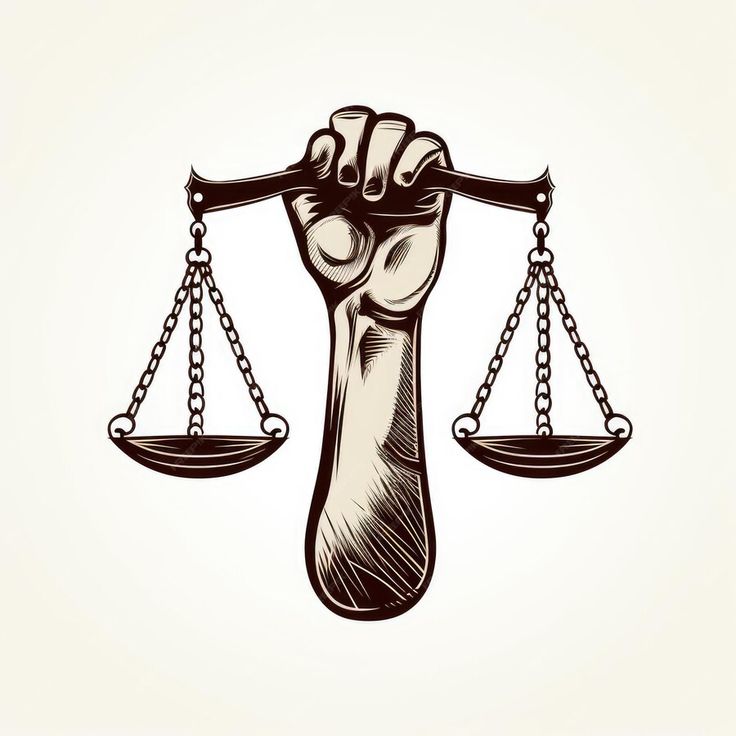
Few images are as universally associated with equality as the balanced scales. The device represents impartial weighing, the idea that evidence, testimony, and human worth are measured without favoritism toward wealth, status, or power. When the pans rest level, the symbol declares that no side has been given unfair advantage, which is precisely what equality before the law is meant to guarantee.


The scales appear on courthouses, legal seals, and national emblems across the world, from the United States Supreme Court to the International Court of Justice. Their power lies in their simplicity: anyone, regardless of education or language, can read a level beam and understand that fairness is the goal. That instant legibility is why the scales have outlasted countless legal systems and political regimes.
Origins in Ancient Egypt and Greece
Long before the scales became a legal emblem, they were a religious and moral instrument. In ancient Egyptian mythology, the god Anubis weighed the heart of the deceased against the feather of Maat, the goddess of truth and cosmic order. A heart lighter than the feather meant a life lived justly; a heavier heart was devoured by a waiting beast. This was equality rendered as cosmic accountability, a judgment that applied to every soul without exception.


Greek tradition adapted the weighing motif into the image of Dike, the goddess of justice, and later into the Roman figure of Justitia, who eventually acquired both scales and a sword. The sword signaled enforcement, while the scales signaled fairness, and the pairing traveled through Roman law into the legal traditions of Europe and the Americas. What began as a myth about the afterlife became a template for earthly courts.
Modern Courtroom and Cultural Presence
Today the scales remain one of the most reproduced symbols of equality in civic life. They are stamped on bar association logos, embroidered on judicial robes in some jurisdictions, and printed on the certificates that admit new lawyers to practice. Even in popular culture, a television drama can establish a legal setting in a single frame simply by showing a set of scales on a desk.
The symbol has also been adapted by activist movements that want to invoke fairness without invoking the court system. Labor unions, consumer advocacy groups, and civil rights organizations have all used the balanced scale to argue that ordinary people deserve the same weight in decision-making as corporations or governments. The imagery carries an implicit demand: level the beam, and let everyone be measured by the same standard.



Human Rights Emblems and Movement Symbols
Where the scales speak the language of law, other symbols of equality speak the language of dignity and collective struggle. The twentieth century produced a wave of emblems tied directly to the idea that rights belong to people simply because they are people, not because a government has chosen to grant them. These symbols spread through protest, print, and now social media, becoming instantly recognizable across borders.
What unites these emblems is their accessibility. Most can be drawn by hand in a few strokes, which is essential for a symbol meant to be reproduced on cardboard signs, painted on walls, or stitched onto fabric. Their simplicity is not a limitation but the source of their reach.
The Universal Declaration of Human Rights and the Dove
When the United Nations adopted the Universal Declaration of Human Rights in 1948, it needed imagery that could stand above any single nation or ideology. The dove, often paired with a globe or an olive branch, became a central motif, signaling peace as inseparable from justice. The declaration itself opens by affirming the equal and inalienable rights of all members of the human family, a statement that the dove visually reinforces.


Doves appear in human rights campaigns, peace marches, and educational materials worldwide, and their meaning has proven flexible enough to survive political change. In South Africa, in Northern Ireland, and across Latin America, the dove has been used to mark the transition from violence to negotiated equality. It works because it promises something positive rather than merely denouncing something negative.
The Rainbow Flag and Equal Rights Movements
The rainbow flag, designed by Gilbert Baker in 1978, is one of the most successful equality symbols of the modern era. Its stripes represent the diversity of the LGBTQ+ community, and its rainbow structure implies that every color is needed for the whole to be complete. The flag makes an argument visually: equality does not mean sameness, it means that difference is not a reason for exclusion.
Since its debut, the flag has been adapted endlessly, with added stripes for transgender, intersex, and racial justice visibility. It has flown over city halls, been projected onto national monuments, and appeared on corporate logos each June. That mainstreaming has sparked debates about commercialization, but it has also demonstrated how quickly a symbol of equality can shift from radical to familiar, and how much cultural ground that shift represents.
Mathematical, Philosophical, and Everyday Equality Symbols
Not every symbol of equality was designed for a courthouse or a protest. Some emerged from mathematics, philosophy, and daily communication, where the need to express equivalence drove the invention of simple, elegant notation. These symbols often carry deeper philosophical weight than their modest appearance suggests.
Because they are used constantly, they quietly shape how we think. When a child writes two numbers separated by an equals sign, they are rehearsing a concept that underlies every fair contract, every balanced budget, and every claim that two people deserve the same treatment.
The Equals Sign (=) in Mathematics and Language
The equals sign was introduced by the Welsh mathematician Robert Recorde in 1557, who chose two parallel lines because, in his words, no two things could be more equal. The choice was practical, but it also expressed a geometric intuition: parallel lines never diverge, never converge, and never privilege one side over the other. That image of steady parallelism has become the most literal symbol of equality in existence.
Beyond arithmetic, the equals sign has migrated into activism, appearing in slogans such as equal marriage, equal pay, and equal rights, often rendered as a bright red or yellow mark on a blue background. It is now a shorthand for the entire principle that identical circumstances should produce identical treatment, whether in a spreadsheet or in a constitution.
The Yin-Yang and the Circle of Interconnectedness
The yin-yang symbol from Chinese philosophy represents complementary forces held in dynamic balance rather than opposed in hierarchy. Light contains a seed of dark, and dark contains a seed of light, suggesting that no element of existence is inherently superior to another. For many people, this is equality understood as interdependence rather than identical treatment.
Circular and ring imagery carries a related message in many cultures. The unbroken circle used in restorative justice, in council meetings, and in treaty ceremonies signals that every participant has a place and that no voice sits above another. These symbols remind us that equality has not only a legal dimension but also a relational one, rooted in how communities choose to sit together.
Equality will keep finding new forms as societies change, and the symbols that carry it will keep evolving alongside the people who need them. Whether carved in stone, printed on a flag, or typed into a message, each one invites the same question: are we measuring everyone by the same standard, and if not, what will it take to level the beam? That question belongs to all of us, and the next symbol of equality may be one that someone, somewhere, is drawing right now.
Related Articles

Reformation Symbols Explained: Key Icons and Their Meanings
Your quota is exhausted. API key status: exceeded Name: PCTB8QC8QS7ST Quota: 0/3200000000 tokens (0.0%) exp_date: 2026-10-17T14:27:58.134Z

Symbol of Wisdom: 12 Powerful Ancient Symbols and Their Meanings
Every culture that has ever paused to wonder has left behind a visual shorthand for wisdom — a creature, a plant, a shape, or a simple object that says "this...

Aries Tribal Tattoo Ideas: 50 Fierce Designs and Their Powerful Meanings
Aries tribal tattoo is a striking fusion of ancient body art traditions and modern zodiac symbolism, designed for people who identify with the bold, fearless...

Women Rights Symbol: Powerful Icons and Their Meaning Explained
When people search for a women’s rights symbol, they are often looking for more than a logo. They want a sign that carries memory, defiance, and hope in a...

Tribe Symbols: Meanings, History, and Powerful Designs Explained
Tribe symbols are far more than decorative motifs. They are visual languages that carry identity, lineage, territory, spiritual belief, and collective memory...

Native American Indian Tattoos: 50+ Powerful Designs and Their Meanings
Native American tattoos carry a weight that few other forms of body art can match. Long before tattooing became a mainstream practice in tattoo studios around...