Cuts of Meat on a Cow: A Complete Guide to Beef Cuts
Stand in front of a well-stocked butcher counter and you are looking at the end result of one of the most ingenious systems in food production: the breakdown of a single animal into dozens of distinct cuts, each with its own personality, texture, and ideal cooking method. Understanding the cuts of meat on a cow is not just trivia for chefs and carnivores. It is practical knowledge that determines whether your dinner turns out fork-tender or shoe-leather tough, and whether you spend fifteen dollars a pound or five.
The modern beef carcass is divided according to a standardized map used across North America, a system that grew out of decades of butchery tradition, USDA grading standards, and the simple logic of muscle anatomy. Muscles that work hard end up tough and full of connective tissue, while muscles that barely move stay tender and marbled. Once you grasp that single principle, the entire beef cuts chart stops looking like a random puzzle and starts reading like a roadmap to better cooking.
How a Beef Carcass Is Broken Down
After slaughter and a period of chilling, a beef carcass is split down the spine into two sides, then divided into large sections known as primal cuts. In the United States, butchers typically recognize eight primals: chuck, rib, brisket, shank, plate, flank, loin, and round. Each primal represents a major anatomical region, and each one carries a distinct ratio of muscle to fat to connective tissue. These primals are the foundation of every retail cut you see in a grocery case.


From there, primals are further subdivided into subprimals, which are the intermediate wholesale cuts sold to restaurants and butcher shops. A subprimal might be a whole ribeye roll, a full tenderloin, or a top round. Only after the final breakdown do we arrive at retail cuts, the steaks, roasts, and stew cubes that carry familiar names like ribeye, sirloin, and short rib. The same primal can yield wildly different products depending on how it is separated.
The Eight Primal Cuts Explained
Each primal occupies a specific neighborhood on the animal, and that location tells you almost everything about how the meat will behave in a pan. The chuck and round come from the front and rear legs, respectively, so they are densely muscled and benefit from slow, moist cooking. The rib and loin run along the upper back, which is why they stay relatively relaxed and produce the most prized steaks on the carcass. The brisket and shank sit directly over working joints, while the plate and flank hang below the middle of the animal.


Knowing the primal is the fastest shortcut to choosing a cooking method. If a cut comes from the chuck, shank, brisket, or round, plan on braising, smoking, or pressure cooking. If it comes from the rib or loin, high-heat grilling and pan searing will reward you. Flank and plate sit somewhere in the middle, offering intense beef flavor that shines when marinated and cooked quickly over fire.
| Primal Cut | Location on the Cow | Typical Cooking Methods |
|---|---|---|
| Chuck | Shoulder and upper front leg | Braising, pot roast, ground beef |
| Rib | Upper back, behind the shoulder | Roasting, grilling, high-heat searing |
| Brisket | Lower chest | Slow smoking, braising |
| Shank | Front and rear lower legs | Osso buco style braising, soup bones |
| Plate | Lower belly, in front of the flank | Slow roasting, short ribs |
| Flank | Lower abdomen behind the plate | Quick grilling, stir-frying, marinating |
| Loin | Upper back toward the rear | Grilling, broiling, roasting |
| Round | Rear leg and hindquarters | Roasting, slow cooking, deli slicing |
Subprimals, Retail Names, and Why Labels Confuse People
The naming system for beef is genuinely chaotic, and it is not your imagination. A single subprimal can appear in a meat case under three or four different names depending on the region, the retailer, and the marketing budget behind it. The cut known as a top blade steak in one store may be sold as a flat iron steak in another, even though both come from the same chuck shoulder clod. The meat is identical; only the label changed.
Restaurant menus compound the confusion by using French-influenced terminology and proprietary branding. A "Delmonico" is essentially a ribeye, and a "New York strip" is the same muscle as a Kansas City strip or a shell steak. When in doubt, ignore the glamorous name and ask where the cut comes from on the animal. Any competent butcher can answer that question in five seconds, and it will tell you more than the label ever will.

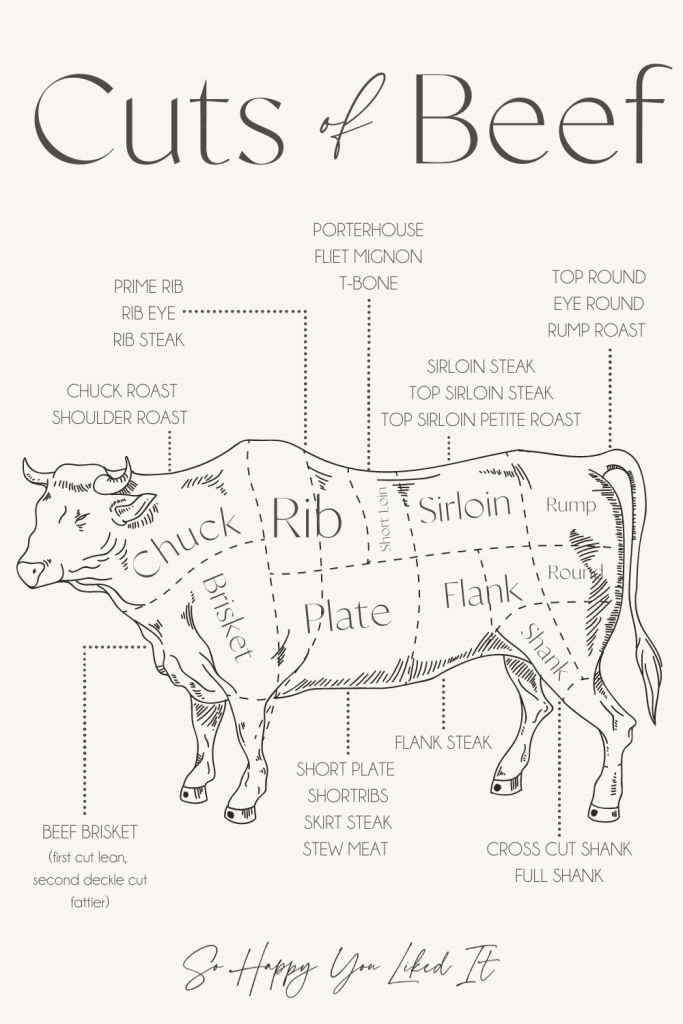


The Front Half: Chuck, Rib, Brisket, Shank, and Plate
The front half of the steer carries an enormous share of the animal's weight, and it is dominated by muscles that spent a lifetime supporting a walking, grazing, head-swinging creature. That workload builds deep flavor along with plenty of collagen, the protein that melts into gelatin during long, slow cooking. Front-half cuts are generally more affordable, which makes them the backbone of home cooking, barbecue, and budget-conscious meal planning.
What front-half cuts lack in tenderness, they make up for in character. The chuck alone accounts for roughly a quarter of the carcass and produces everything from ground beef to the surprisingly tender flat iron. Barbecue culture in Texas and Kansas City was essentially built on the front half, transforming brisket and beef short ribs into icons. Treat these cuts with patience and moisture, and they will outperform far more expensive steaks in flavor.
Chuck and Shoulder: The Workhorse of the Carcass
The chuck sits over the shoulder and extends into the neck, and it is the hardest-working region on the entire animal. Muscles here are constantly engaged in walking, turning, and lowering the head to graze, so they develop thick connective tissue and robust beefy flavor. Chuck roasts, chuck steaks, and the majority of supermarket ground beef all originate in this primal. It is also where you find some hidden gems, including the flat iron and the Denver steak.


Slow cooking is the classic approach: a three-pound chuck roast braised with onions, wine, and stock for three hours becomes something silky and spoon-tender. But the chuck is more versatile than its reputation suggests. The flat iron, taken from the top blade, is second only to the tenderloin in tenderness and takes beautifully to a hot cast iron skillet. Meanwhile, ground chuck with its roughly twenty percent fat content makes a burger that is far juicier than anything labeled "lean."
Rib, Brisket, Shank, and Plate
The rib primal is where luxury begins. Sitting along the upper back, these muscles do comparatively little work, so they stay tender and develop generous intramuscular fat. The ribeye and prime rib roast both come from here, and the bone-in ribeye is often considered the most flavorful steak on the carcass because of the fat that runs through and around the eye of the meat. This is the section to splurge on for a special occasion dinner.
Brisket, by contrast, is a tale of two muscles separated by a thick layer of fat: the lean flat and the fatty point. It sits over the chest and absorbs a tremendous amount of impact during the animal's life, which is why it demands twelve to sixteen hours in a smoker at low heat. The shank and plate round out the front half, with shank bones delivering remarkable collagen for stocks and braises, and plate yielding the beef short ribs that barbecue enthusiasts seek out for their deep, mineral-rich flavor.
The Back Half: Loin, Round, and Flank
Move toward the rear of the animal and the character of the meat shifts. The loin, running along the upper back toward the hips, contains the muscles that move the least and therefore produce the most tender steaks: the tenderloin, the strip loin, the T-bone, and the porterhouse. This is the most expensive real estate on the carcass, and it commands premium prices in steakhouses worldwide for good reason.
The round and flank occupy the opposite end of the spectrum. The round covers the hind leg, a massive muscle group responsible for propulsion, which means it is lean, dense, and prone to toughness if mishandled. The flank hangs low on the abdomen and is fibrous but intensely flavored. Both offer excellent value for cooks willing to use the right technique, whether that is a slow roast, a long marinade, or a very sharp knife slicing against the grain.
The Loin: Where Steakhouse Favorites Live
The loin is divided into the short loin and the sirloin. The short loin produces the strip steak, the T-bone, and the porterhouse, the latter two being bone-in cuts that contain both strip loin and tenderloin. The tenderloin itself runs along the inside of the spine and is the single most tender muscle on the animal, though it carries less fat and therefore less flavor than a ribeye. Filet mignon is simply a thick slice from the narrow end of that tenderloin.
Sirloin comes from further back toward the hip and offers a middle ground: reasonably tender, well flavored, and more affordable than short loin cuts. Top sirloin is an excellent grilling steak, while the tri-tip, a triangular muscle from the bottom sirloin, has become a California barbecue staple. Because these cuts are lean, they benefit from careful cooking, a good sear, and resting before slicing so the juices redistribute rather than run out onto the board.
Round and Flank: Lean, Affordable, and Versatile
The round is the largest primal on the carcass and the source of many economical favorites. Top round, bottom round, and eye of round are all lean, beefy cuts that work best when roasted slowly and sliced thin, or braised until tender. They are also the traditional source of deli roast beef and the familiar London broil, a dish that depends entirely on marinating and slicing across the grain to stay pleasant to chew.
The flank steak sits just beneath the loin and is defined by its long, visible muscle fibers. Grilled hot and fast, rested, and sliced thinly against the grain, it becomes the classic base for fajitas and steak salads. Skirt steak, technically from the plate rather than the flank, behaves similarly and is prized for its loose texture and ability to soak up marinades. Both deliver more beef flavor per dollar than almost any other cut in the case.
Learning this map changes the way you shop. Instead of reaching for the same familiar package every week, you can look at a beef cuts chart and make a deliberate choice: a chuck roast for Sunday braising, a flank for Tuesday fajitas, a bone-in ribeye for the night that deserves a little celebration. Ask your butcher to point out where each cut comes from, experiment with the affordable primals first, and let your own kitchen decide which part of the cow earns a permanent place in your rotation.
Related Articles

What Is Beef Stew Meat? A Complete Guide to Cuts, Cooking, and Buying
Beef stew meat is a familiar label at the butcher counter and grocery store, but it is not a single, specific cut from one part of the cow. Instead, it is a...
Types of Meat Cuts: The Ultimate Guide to Every Cut, Name, and Use
Your quota is exhausted. API key status: exceeded Name: PCTB8QC8QS7ST Quota: 0/3200000000 tokens (0.0%) exp_date: 2026-10-17T14:27:58.134Z

Beef Cuts Poster: Ultimate Butcher's Guide to Every Steak, Roast & Primal Cut
A beef cuts poster is more than just a decorative piece for a butcher shop or kitchen wall. It is a practical reference tool that transforms a confusing array...

Bone in Rib Roast Cooking Time: Your Complete Guide to Perfect Beef
Cooking a bone in rib roast is one of the most impressive ways to feed a crowd, but the question that trips up even experienced cooks is simple: how long does...

Growing Hemp for CBD Oil: The Complete Beginner's Guide to High-Yield CBD Crops
Your quota is exhausted. API key status: exceeded Name: PCTB8QC8QS7ST Quota: 0/3200000000 tokens (0.0%) exp_date: 2026-10-17T14:27:58.134Z

What Is a Ventless Fireplace? The Complete Guide to Benefits, Safety, and Installation
If you have been browsing fireplace options for a condo, apartment, basement, or a home without a chimney, you have likely run into the term ventless...