Address Book Template: Free Printable & Editable Contact Organizer
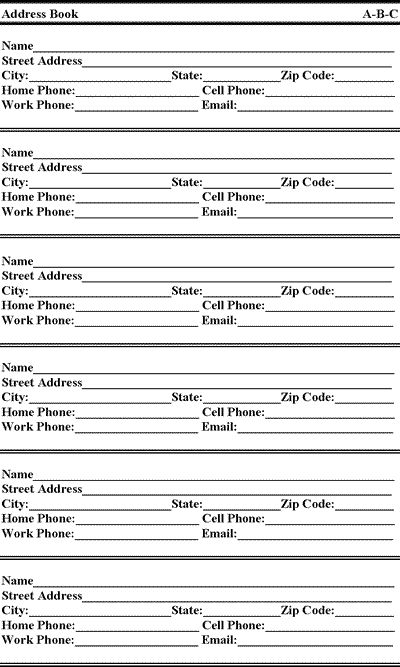
An address book template is a pre-formatted document, spreadsheet, or digital file designed to hold contact information in a structured, easy-to-read layout. Instead of scribbling names and numbers onto random scraps of paper or scattering them across three different apps, you get a single organized system where every entry follows the same pattern. Whether you run a small business, manage a community group, or simply want to stop losing track of your dentist's phone number, a well-built template saves time and reduces frustration.
The real value lies in consistency. When every contact record includes the same fields in the same order, you can scan a page in seconds, sort entries alphabetically, filter by category, and export the whole list when you need to send invitations or update a mailing. This guide walks through what makes a template genuinely useful, how to choose the right format for your situation, and the habits that keep your contact list clean and reliable over the long term.
Understanding the Building Blocks of an Address Book Template
At its core, an address book template is nothing more than a container with labeled slots. The labels tell you where each piece of information belongs, which sounds trivial until you inherit someone else's messy contact list and discover that half the entries have no last name and the other half list three different phone numbers with no explanation. A good template eliminates that ambiguity by defining, in advance, exactly what information you capture and where it goes.


The format itself can be almost anything: a printed sheet with ruled columns, a Microsoft Word table, an Excel workbook with multiple tabs, a Google Sheets document shared with colleagues, or a note-taking app with a contacts database. What matters is that the structure fits how you actually work. Someone who makes calls from a desk will thrive with a spreadsheet, while someone who visits clients in the field may prefer a printable page tucked into a planner.
Which Fields Belong in a Typical Template
The essential fields cover the basics: full name, phone number, email address, and physical mailing address. From there, templates often add a company or organization field, a job title, a secondary phone number, a birthday or anniversary date, and a free-form notes column for details that do not fit anywhere else. Adding a category or group column, such as family, client, vendor, or emergency contact, makes filtering dramatically easier once your list grows beyond a few dozen names.


Thoughtful templates also include a "last updated" column and a unique ID or reference number for each entry. Those two additions seem minor, but they help you spot stale records and prevent duplicate entries from silently accumulating. If you plan to print your address book, leave generous margins and avoid squeezing too many columns onto a single page, since cramped layouts are difficult to read and even harder to update by hand.
Printable Versus Digital Address Book Templates
Printable templates appeal to people who like the tactile experience of writing entries by hand, keeping a physical binder on a shelf, or storing a backup copy somewhere that does not depend on electricity or an internet connection. They are also excellent for shared household use, where a page on the fridge or in a drawer is instantly accessible to everyone. The tradeoff is obvious: updating a printed page means crossing out old information or reprinting the whole sheet, and searching for a single number requires flipping through pages.
Digital templates solve those problems through search, sorting, and filtering. A spreadsheet can hold thousands of contacts, highlight duplicates, and export directly into a mail merge for holiday cards or invoices. Cloud-based versions sync across devices, so the number you saved on your laptop is available on your phone. Many people end up using both: a digital master list for accuracy and a printed summary for quick reference in the kitchen or workshop.


Choosing and Customizing the Right Template
There is no single best address book template, because the right choice depends entirely on how many contacts you manage, who else needs access, and what you intend to do with the information. A freelancer tracking twenty clients has very different needs from a volunteer coordinator managing three hundred event participants. Before downloading the first template you find, spend a few minutes defining your requirements.
Start by asking three questions: How many entries will this list realistically hold? Will anyone else read or edit it? Do I need to sort, filter, or export the data regularly? The answers point you toward either a lightweight printable sheet or a more robust spreadsheet with validation rules and multiple tabs. Getting this right at the beginning prevents the painful migration that happens when a simple document outgrows its purpose.
Matching the Template to Personal and Professional Scenarios
For personal use, a single-page template with columns for name, relationship, phone, email, and address is usually sufficient. Families often benefit from combining this with a birthday and anniversary column, which turns the address book into a lightweight reminder system. Students and recent graduates might prefer a template organized by category, separating classmates, professors, and internship contacts so that networking remains manageable after graduation.

Business scenarios demand more structure. A sales professional typically needs fields for company, account status, last contact date, and follow-up notes, essentially a lightweight customer relationship management sheet. Event planners need guest counts, dietary preferences, and RSVP status. Nonprofits often track donors separately from volunteers and vendors, which means either a category column or multiple worksheet tabs. The key is to choose a template whose default columns match your workflow rather than forcing your workflow into someone else's design.
Customization Techniques That Improve Usability
Once you have a base template, a few small adjustments make it significantly more pleasant to use. Rename column headers so they match your vocabulary, widen columns that hold long addresses, and freeze the top row so headers stay visible while you scroll. In spreadsheet-based templates, add dropdown lists for categories and status fields, which keeps entries consistent and prevents spelling variations that break filtering.
Conditional formatting is another underused feature. You can highlight rows where the last contact date is more than six months old, or color-code entries by category so that clients, vendors, and personal contacts are visually distinct. If you print your address book, consider grouping entries alphabetically with a tab or divider for each letter, and leave a blank row between groups so the eye can rest. These details take minutes to set up and pay off every time you open the file.
Maintaining an Address Book That Stays Useful
Building the template is the easy part. The real challenge is keeping it accurate months and years later, when people move, change phone numbers, switch jobs, and change their last names. An outdated address book is worse than no address book at all, because it creates false confidence that you have the right information when you actually do not. A simple maintenance routine prevents that slow decay.
Set a recurring reminder, perhaps quarterly, to review your list and verify anything you have doubts about. Combine that with a habit of updating entries immediately after you learn something has changed, rather than promising yourself you will do it later. If multiple people share the file, agree on who is responsible for updates and how new entries should be formatted, since inconsistent data entry is the fastest way to turn a clean list into a chaotic one.
Routine Habits That Prevent Clutter and Duplicates
Duplicates creep in quietly. You save a contact under a nickname in one place and a full legal name in another, and suddenly you have two records for the same person. Periodically scanning for repeated phone numbers or email addresses catches most of these problems. Many spreadsheet programs include a built-in duplicate removal tool, and even a simple sort by last name makes obvious repeats easy to spot.
It also helps to standardize how you write entries. Decide whether you will store phone numbers with dashes or without, whether company names include suffixes like Inc., and whether addresses use abbreviations or full street names. Pick one convention and stick to it. Consistency is not about being fussy; it is what allows you to sort, search, and export your data without surprises later.
Protecting Sensitive Contact Information
Address books often contain personal data that deserves protection: home addresses, private mobile numbers, birth dates, and sometimes payment details. If your list lives in a shared drive or cloud account, review who has access and remove people who no longer need it. Enable two-factor authentication on the account holding the master file, and avoid emailing the full list as an unprotected attachment.
For printed copies, store the binder somewhere reasonably private rather than leaving it open on a desk. If you handle client data professionally, check whether local privacy regulations such as the GDPR or CCPA impose specific obligations on how you store and delete that information. These steps take little effort, but they protect both the people in your address book and your own reputation.
Whether you choose a simple printed sheet or a fully automated spreadsheet with dropdowns and conditional formatting, the goal remains the same: a contact list you can trust and actually enjoy using. Start with a template that fits your real workflow, customize it enough to feel natural, and set aside a few minutes each quarter to keep it current. Do that, and your address book stops being a chore and becomes one of the quietly indispensable tools you rely on every week.
Related Articles

Parking Ticket Template: Free Editable & Printable Downloads
Your quota is exhausted. API key status: exceeded Name: PCTB8QC8QS7ST Quota: 0/3200000000 tokens (0.0%) exp_date: 2026-10-17T14:27:58.134Z

Stationery Templates: Free Editable & Printable Designs for Work, School & Life
A stationery template is a pre-formatted design you can reuse for letters, notes, invoices, labels, and countless other printed or digital materials. Instead...

Blank Uno Card Template: Free Printable & Editable Cards for DIY Fun
Your quota is exhausted. API key status: exceeded Name: PCTB8QC8QS7ST Quota: 0/3200000000 tokens (0.0%) exp_date: 2026-10-17T14:27:58.134Z

Free Calendar Template October 2018: Printable & Editable
Searching for a calendar template for October 2018 might seem like an odd request in a world of constantly updating digital planners, but the demand is real...

Free Ice Cream Cone Template: Fun Printable & Editable Designs
An ice cream cone template is one of those quietly useful design tools that powers everything from classroom crafts to professional branding assets. At first...

Free Pet Health Certificate Template: Printable, Editable & Ready to Use
Whether you are a veterinarian, a groomer, a pet sitter, or a pet owner preparing for air travel, having a reliable pet health certificate template on hand can...